Jan 2025
Case Study
Overview
CITY Furniture is a furniture retailer based in Florida. This case study covers improvements made to their listing pages as part of a larger web optimization project.
📈
0.0%+
📉
-0.0%
⏱️
0.0%+
2 months pre/post comparison.
Contributions
Led design from concept to ship setting the direction, producing the work, and driving the team toward measurable outcomes.
Partnered cross-functionally with UX research to assist in uncovering key user pain points.
Worked closely with stakeholders to refine product strategy, balancing user needs with business goals.
Problem
01
Cluttered Navigation
Top-heavy menu structure consumed valuable screen real estate.
02
Inefficient Product Display
The grid layout made products cramped & reduced image sizes.
03
Complex Filtering
Filters included rarely used options and lacked organization.
Solution
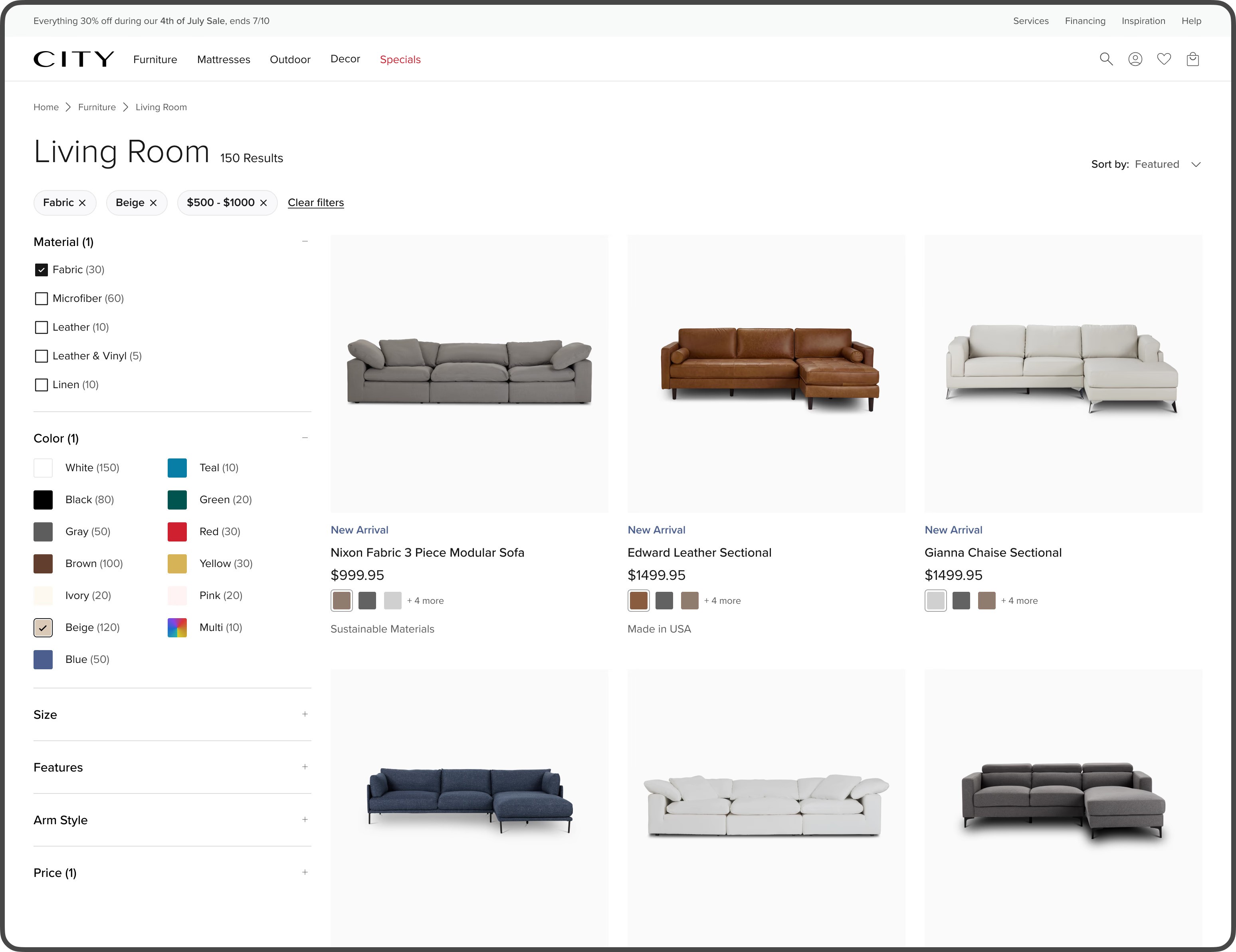
Redesigned listing page experience
We tackled every user pain point (filtering, product cards & grid) head on and delivered an improved ecommerce experience.
Impact
Improved KPIs
📈
0.0%+
📉
-0.0%
⏱️
0.0%+
Process
Competitive analysis
01
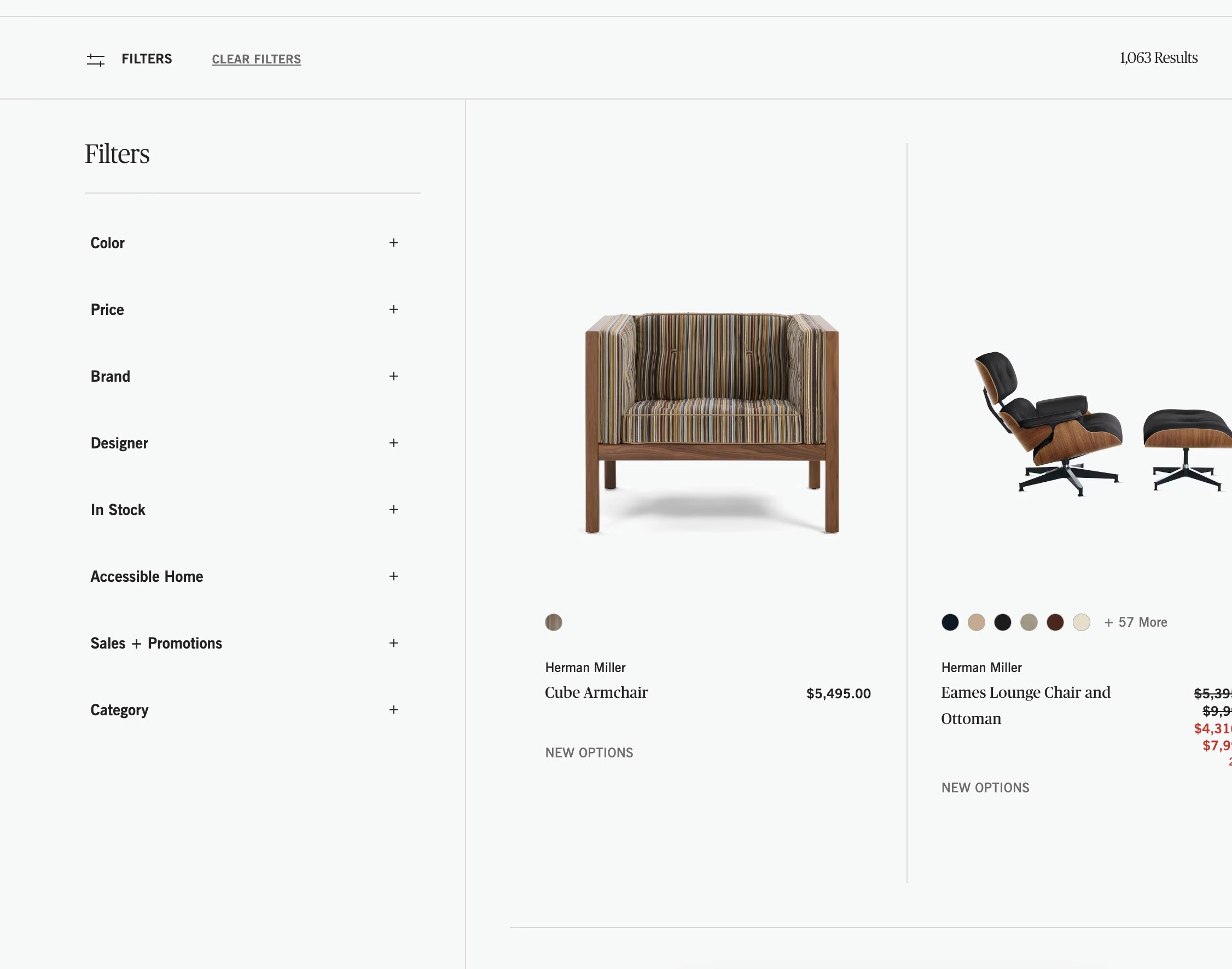
Traditional left sided filtering
Top positioned filtering was very uncommon.
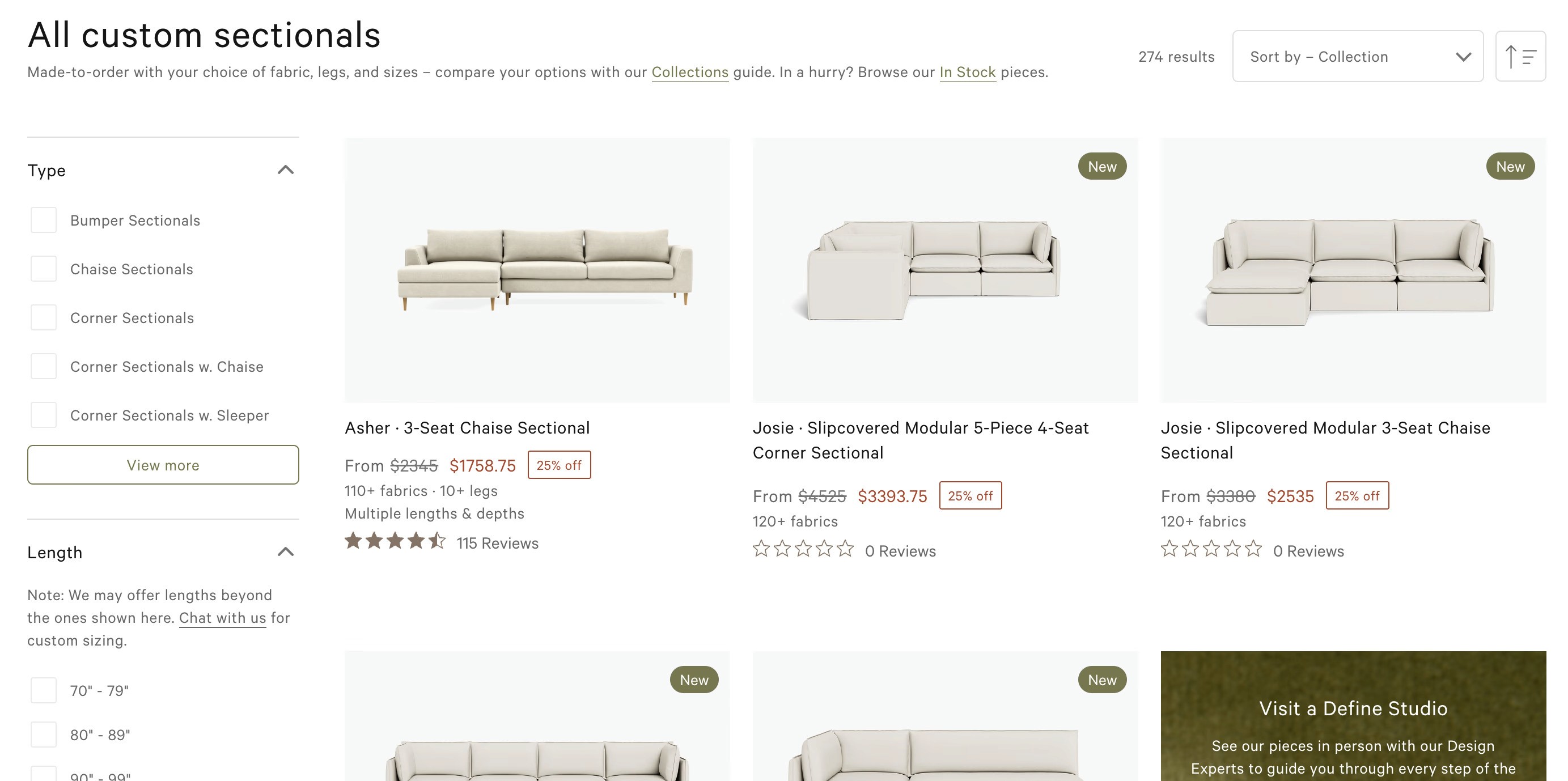
02
Limited products to 2 or 3 per row
This is done to showcase products visually i.e. larger images.
03
Condensed multiple listings into single product cards
Competitors replaced multiple listings with single cards offering configurable color and fabric options.
UX research collaboration
Overwhelming navigation options
Frustration over duplicate products (just different color variants)
Difficulty finding items while using filters
User goals
Intuitive browsing
Simple and efficient ways to explore products
+
Buying confidence
Gathering enough info to make an informed decision
Business goals
Increasing conversion
Reducing friction to improve conversion & AOV
+
Promoting discoverability
A wide selection demands effortless product access
Designs
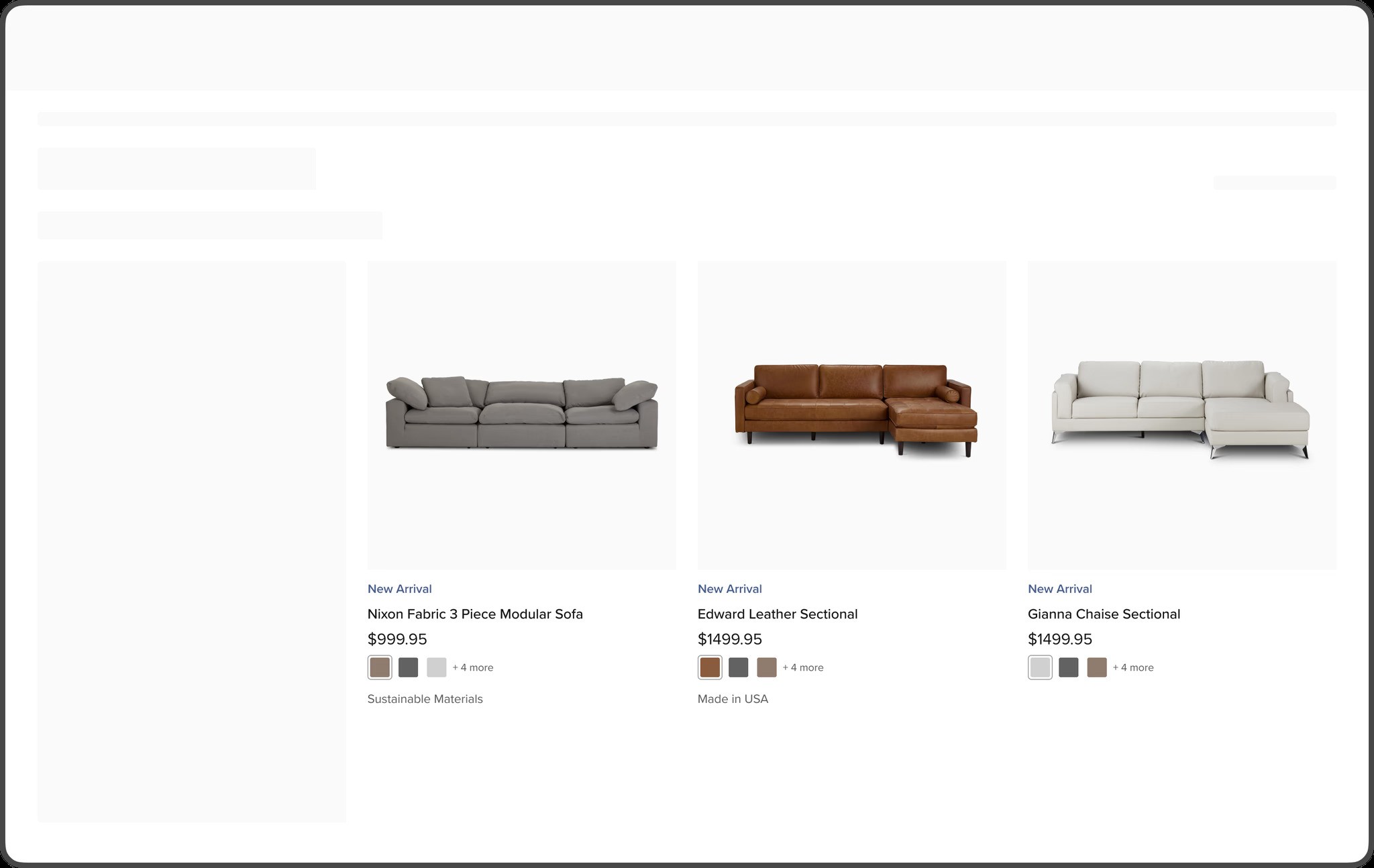
PLP rows
A clean, spacious layout with 3 items per row (down from 4), giving each product room to shine without overwhelming users. (Desktop only)
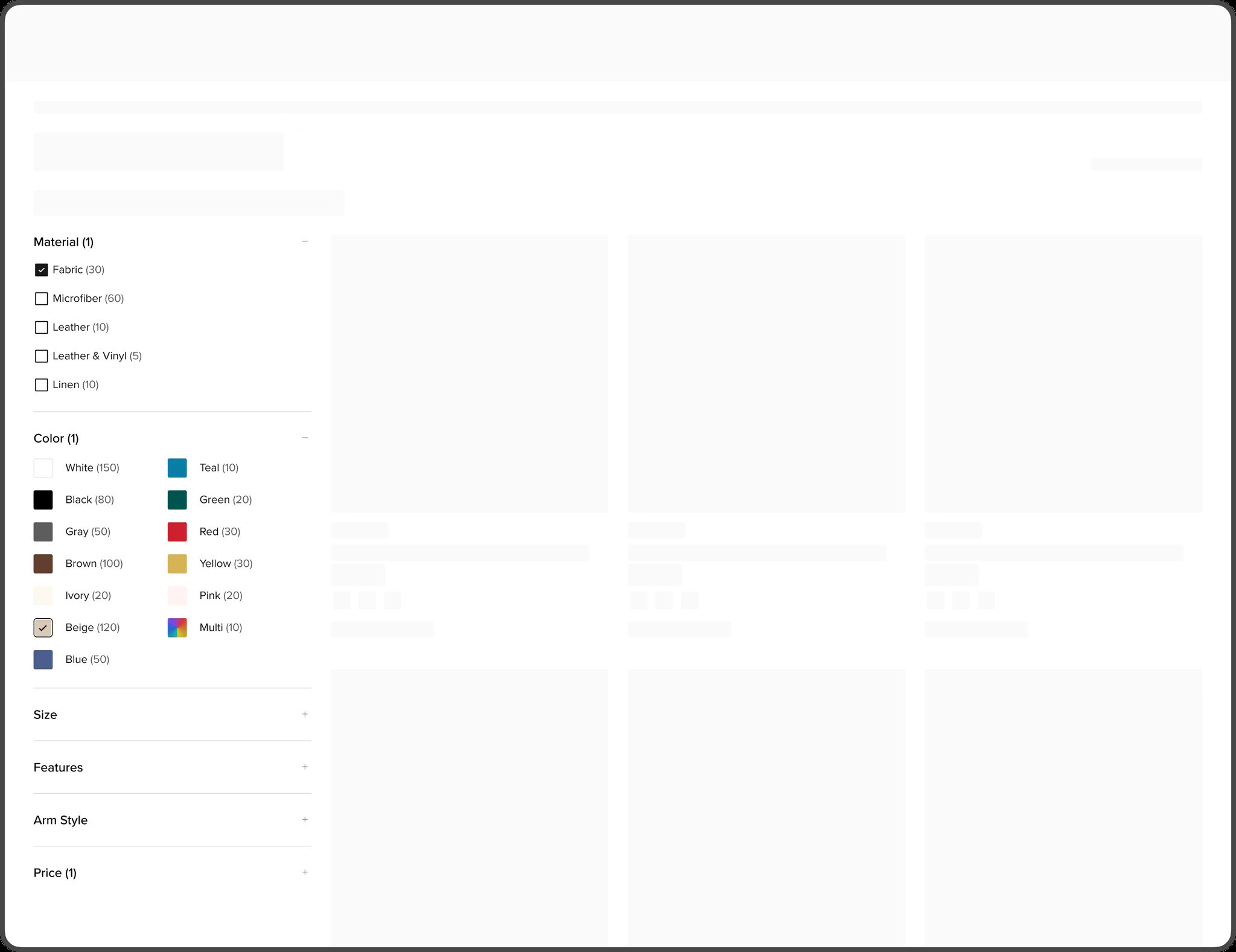
Left-sided filter (desktop)
A sticky left-hand filter rail that’s easy to access but stays out of the way, replacing the clunky top-menu approach.
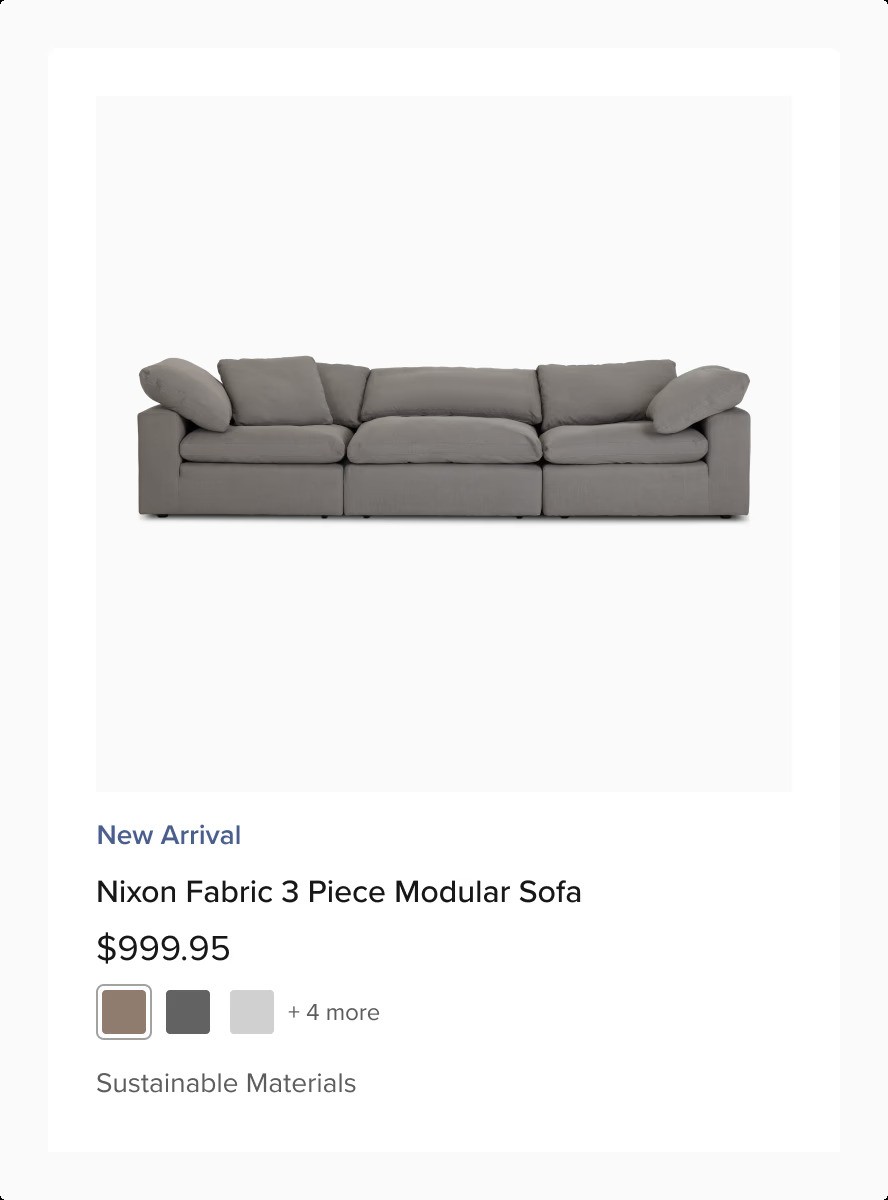
Product cards
Larger product cards (1:1 image ratio) with better imagery and prioritized details (like badging and swatch options).
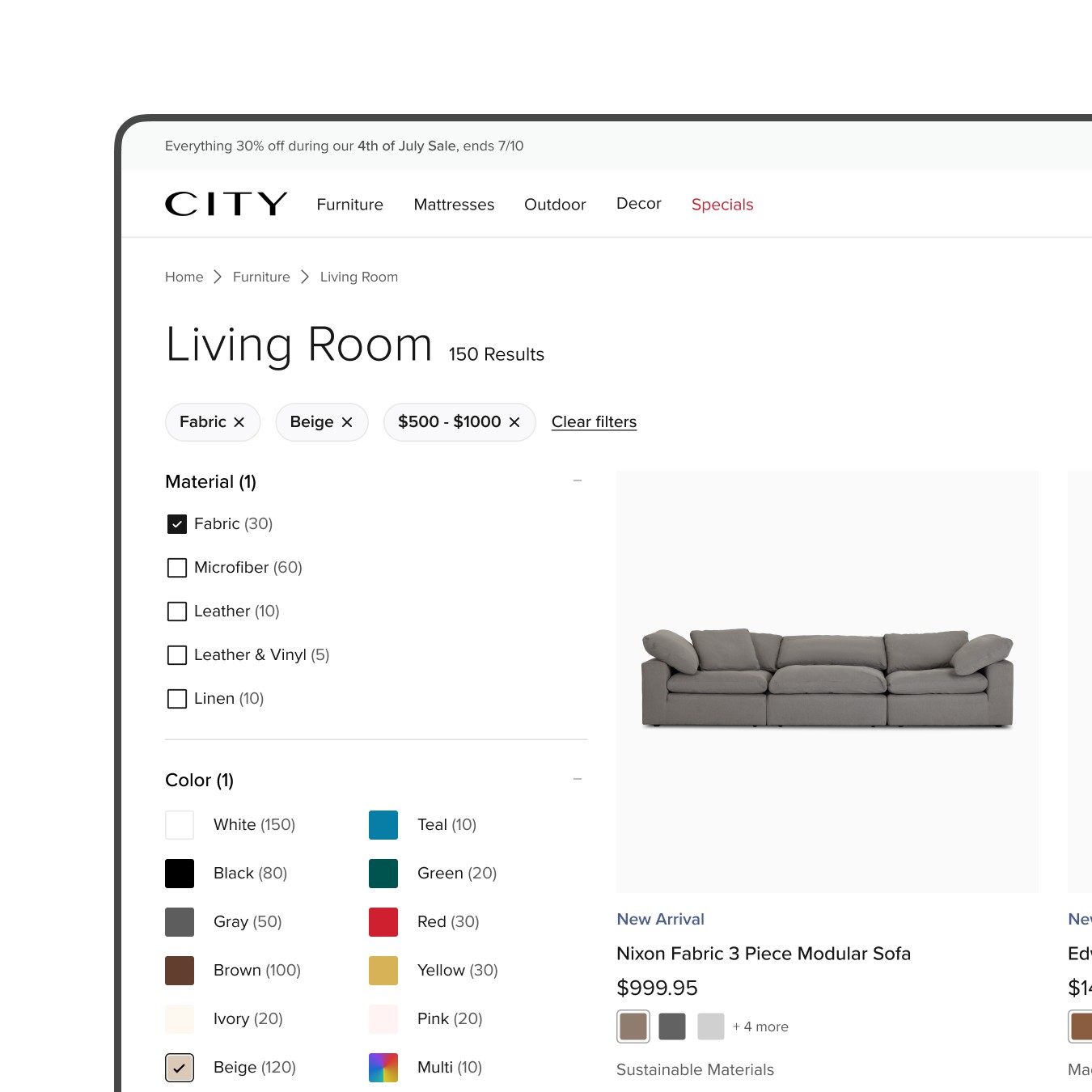
Filtering experience
Clearer labels and visual feedback so users know exactly what they’ve selected. The pills highlight selections users made.
Filtering experience (mobile)
The same idea was carried over for mobile as well. The pill selections are visible on the PLP and the filter view.
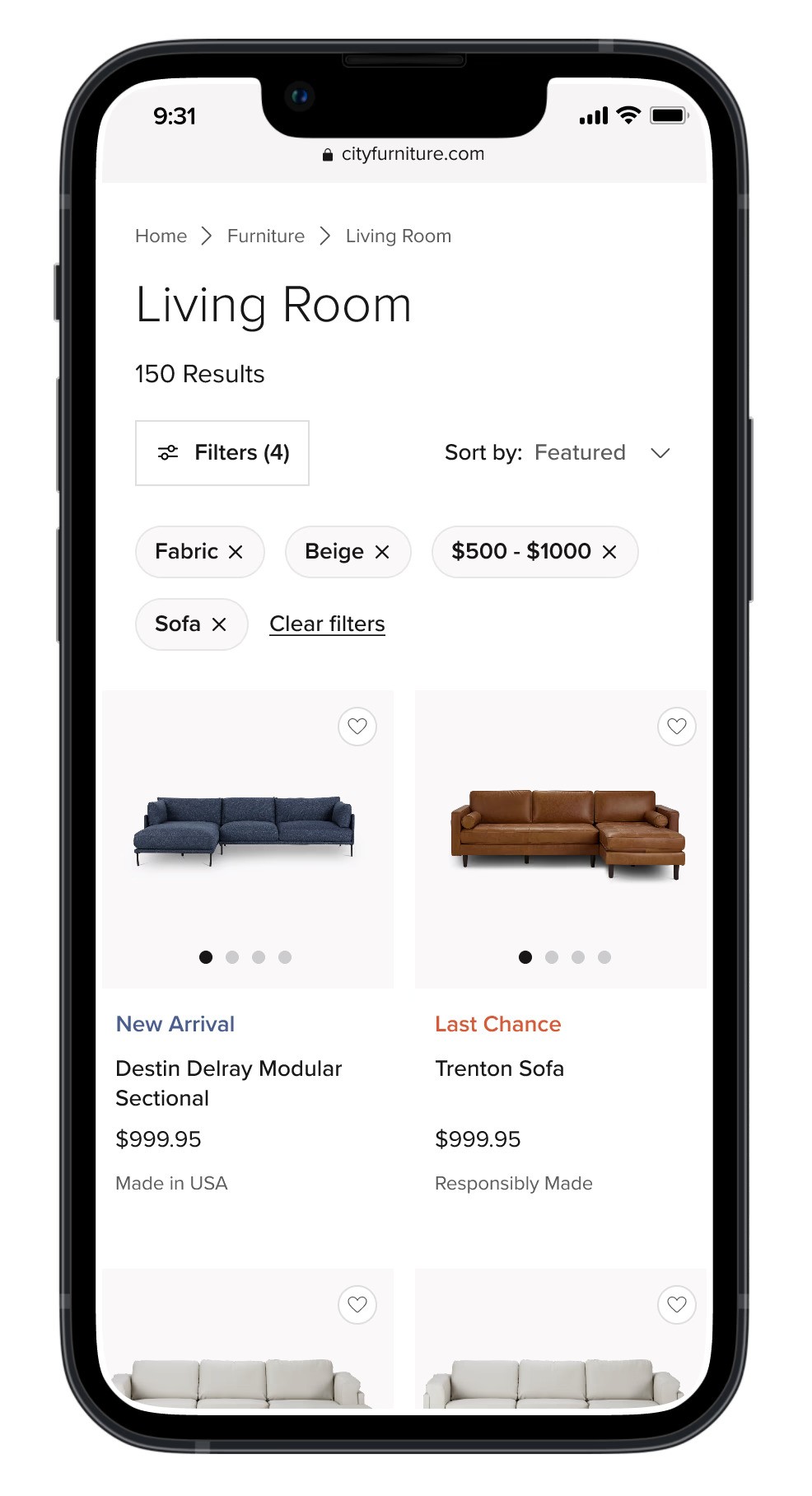
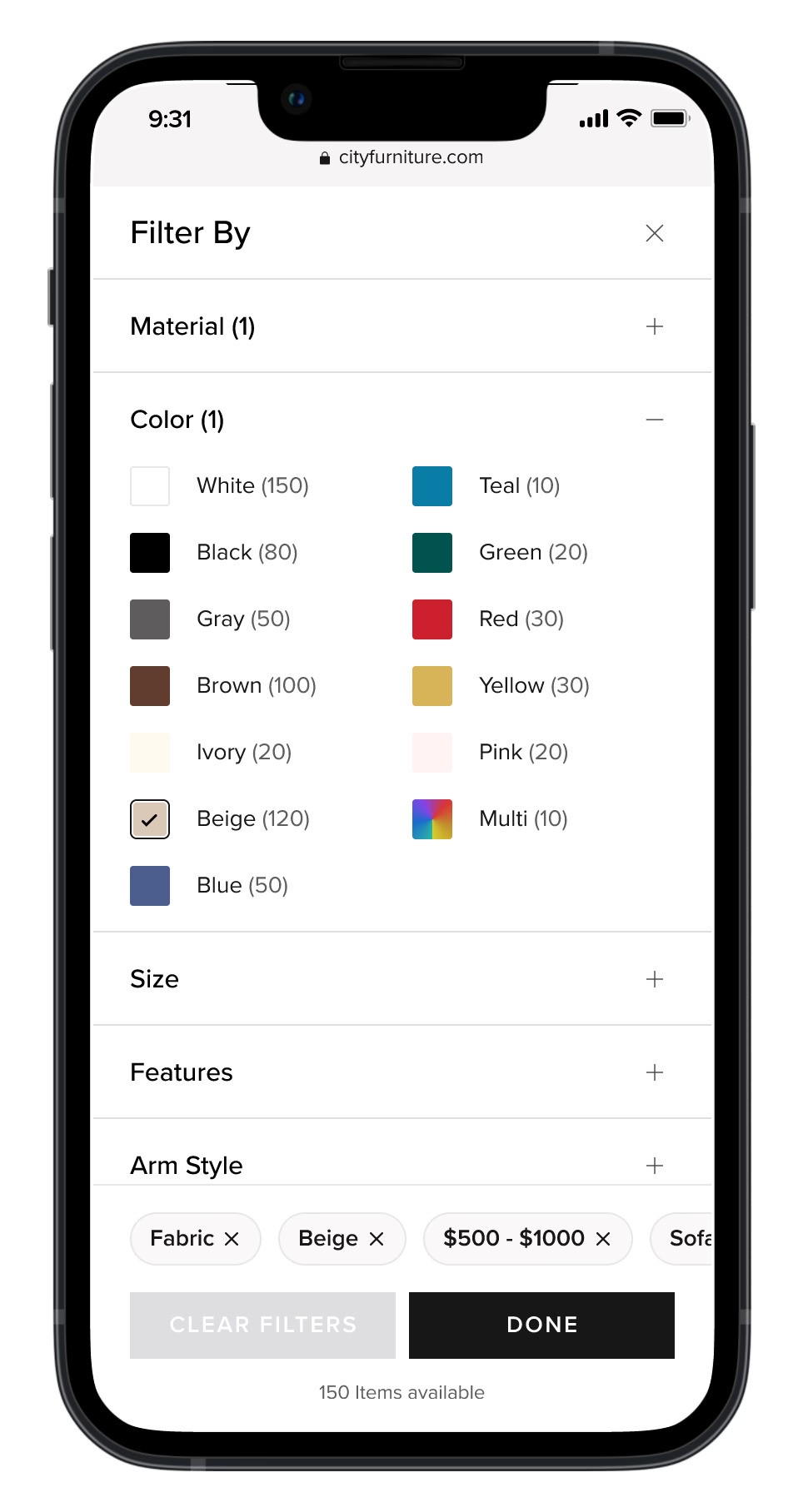
Product card swatches removed for mobile browsing
Learnings
Working as a product team
We collaborated closely with the development team, holding extra check-ins to fine tune key interactions and flows, ensuring clear communication.
Working agile
Our approach created a faster, flexible workflow and a product that was aligned with team and business goals. This worked because:
No surprises: Constant collaboration meant fewer last-minute changes.
Faster iterations: Small, frequent handoffs kept momentum high.
Shared ownership: Devs contributed to the design’s success, and designers understood technical trade-offs.
Our listing pages today
Our improvements made shopping smoother, and user feedback continues to help improve it. The team is continually working on further improvements. See the latest version of our PLP here.
© 2026. Made by @jaimcarrasco