March 2026
Visit site









Overview
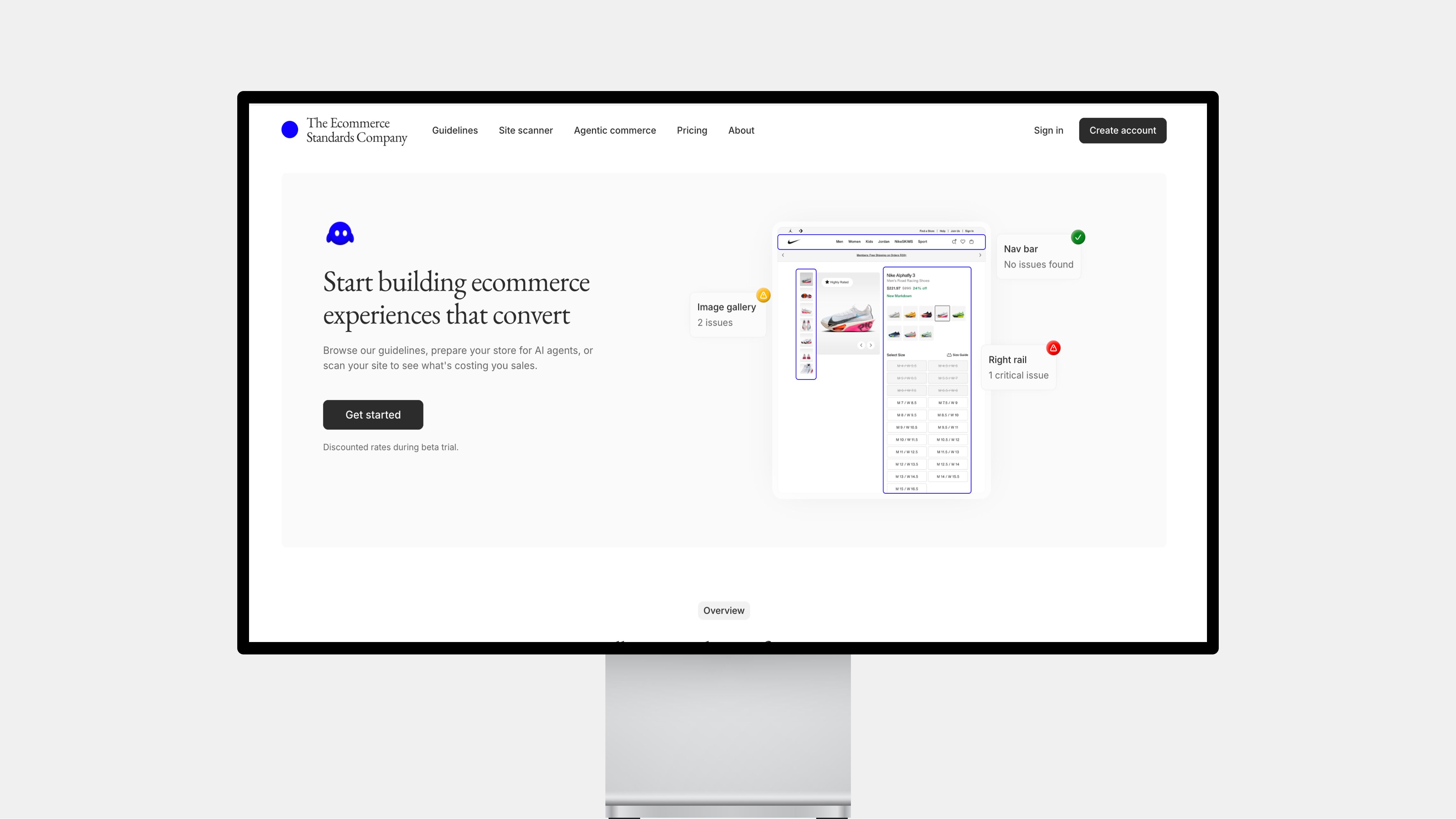
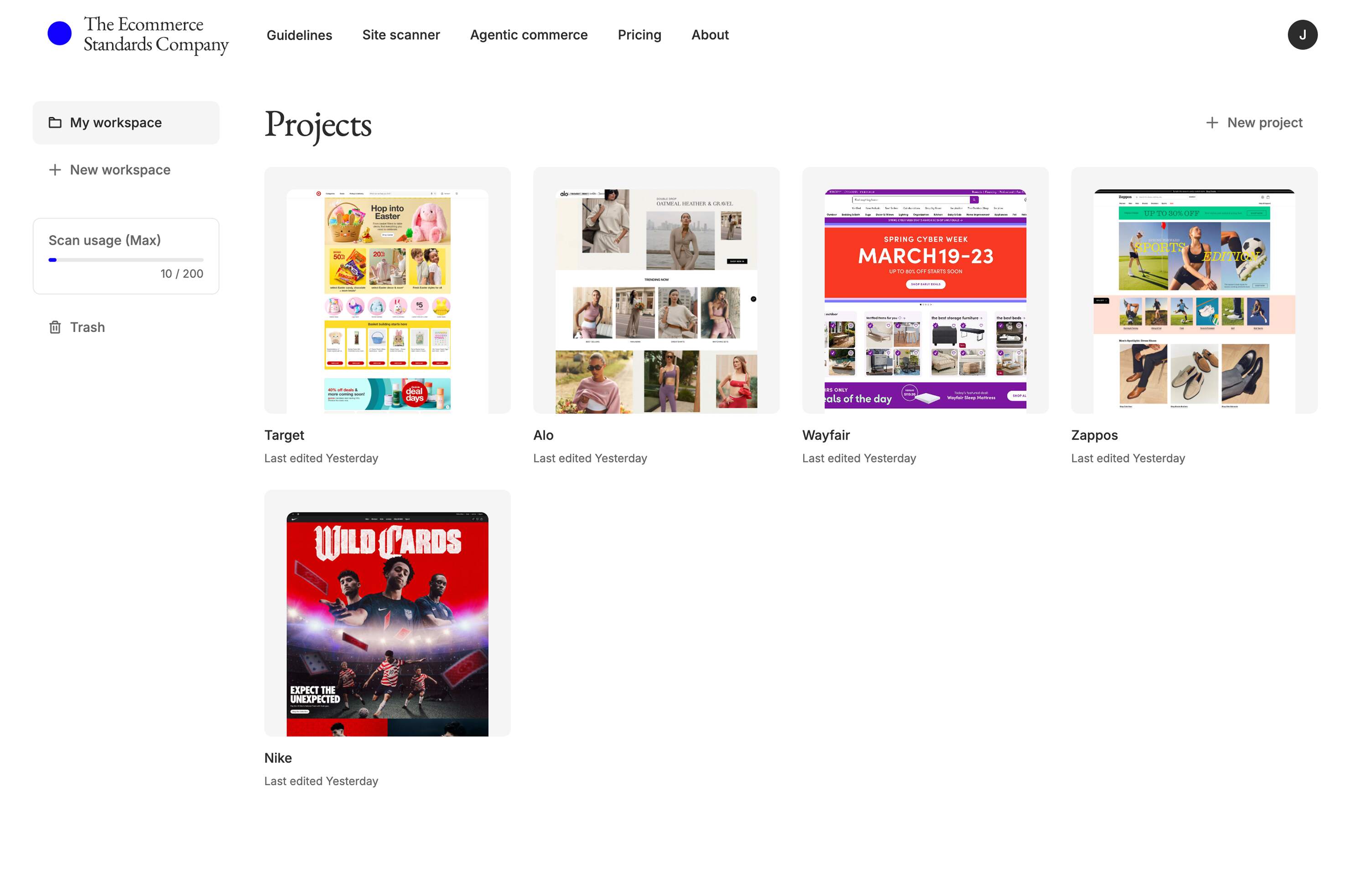
The Ecommerce Standards Company started with a simple idea: help merchants deliver best-in-class ecommerce experiences. I designed and built the platform from the ground up, starting with a collection of research-backed guidelines that has since grown into a suite of AI-powered features serving both sides of the modern storefront:
The human customer and the agentic customer.
Architecture
The platform is composed of five parts, each one handling a different job, from what users see to what happens behind the scenes.

Marketing site
Framer

Web app
Next.js app on Vercel


Backend database
Supabase

AI layer
OpenAI
Features
Research backed guidelines
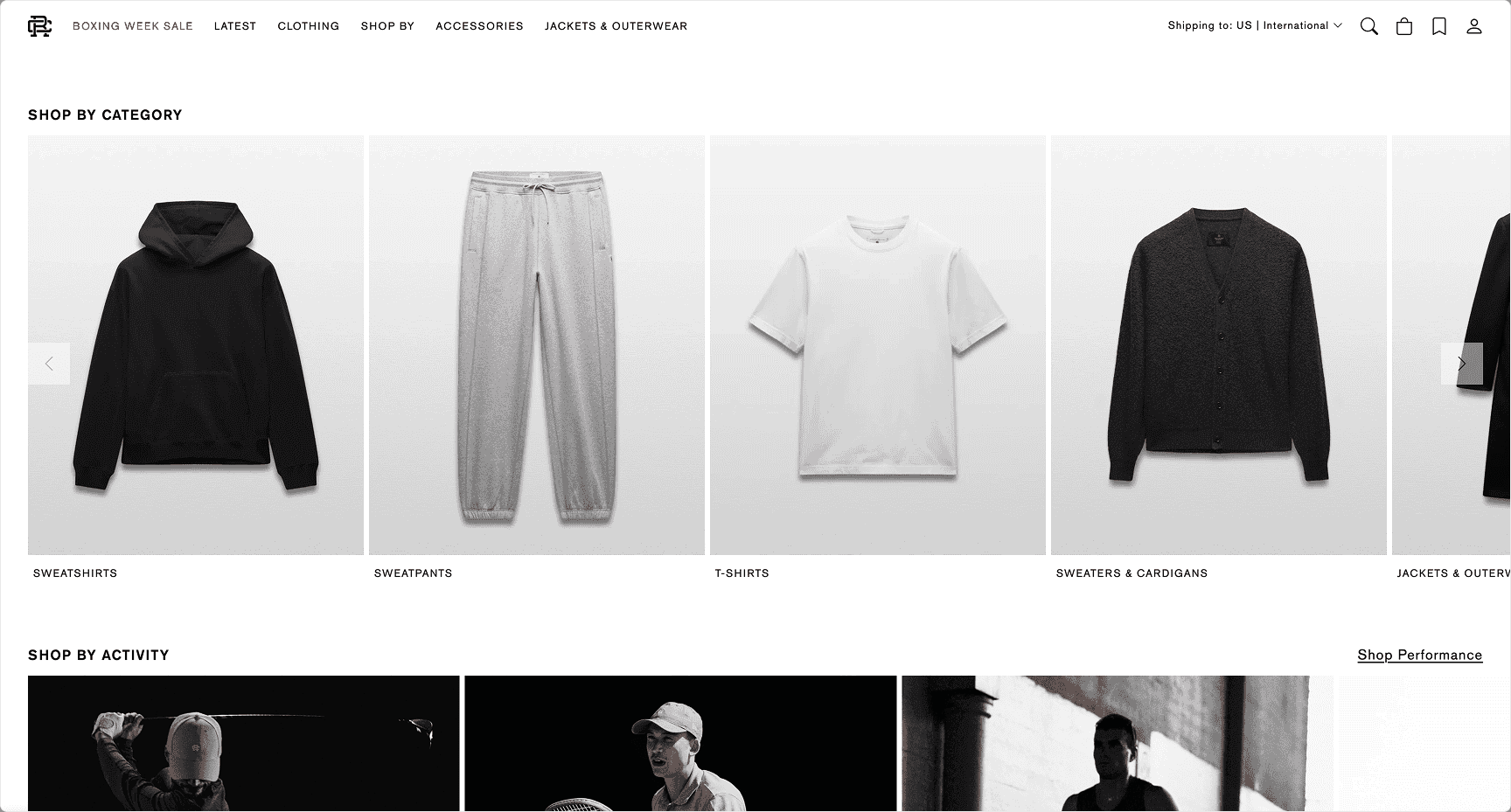
I started with a foundation of research guidelines to bring clarity and consistency to ecommerce UX. They translate best practices into a practical, usable standard that teams can apply directly. Everything else on the platform builds on this.
The Ecommerce Standards Company
Summary
Problem
Solution
Examples
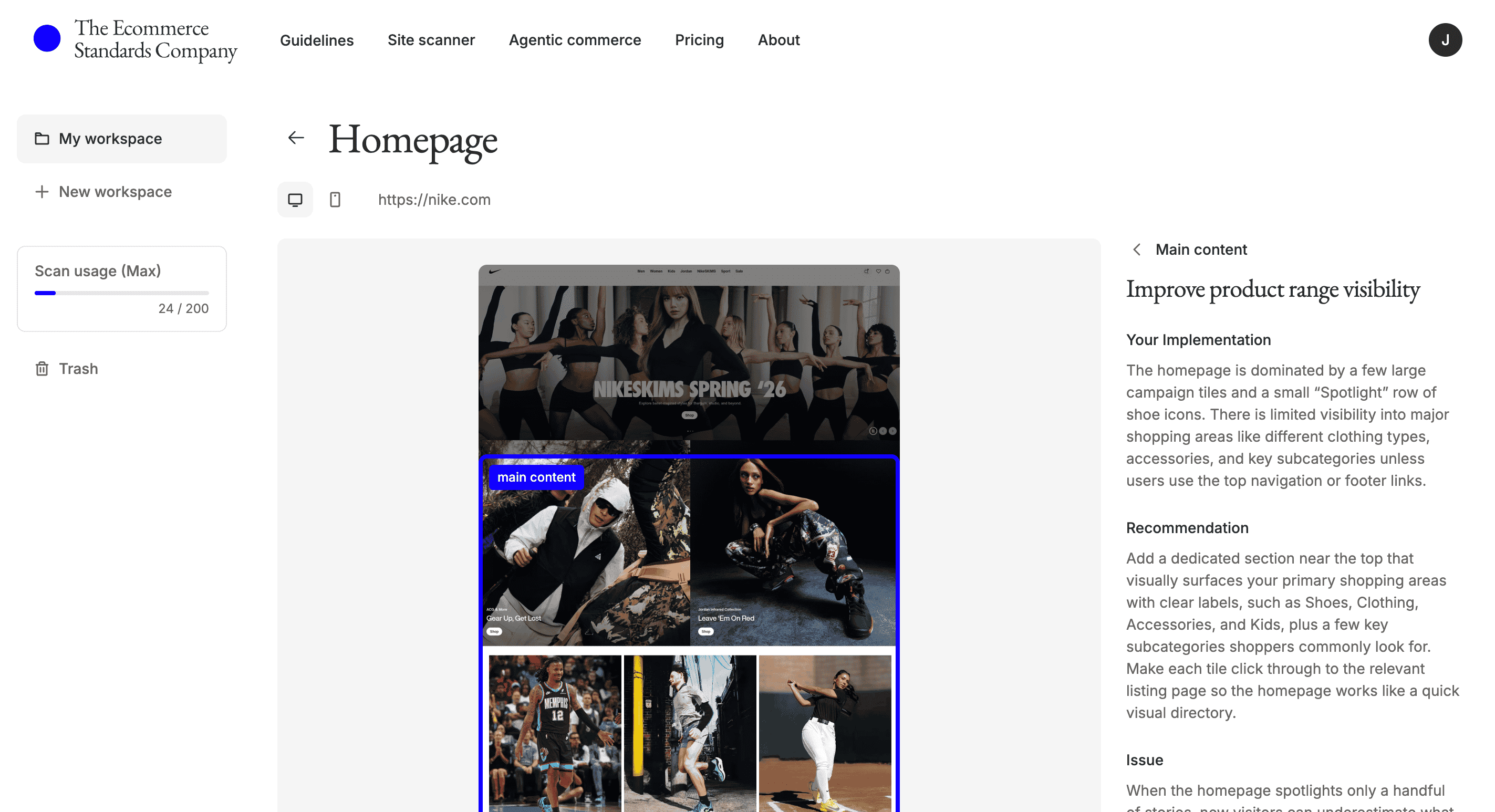
Improving Product Range Visibility
Show product variety on your homepage so visitors see your full range
Desktop
Mobile
Summary
Users visiting an ecommerce site for the first time form immediate conclusions about what products are available based on what they see on the homepage.
When homepages fail to showcase the full breadth of inventory, potential customers frequently underestimate the catalog's scope and leave to shop elsewhere.
AI site scanner
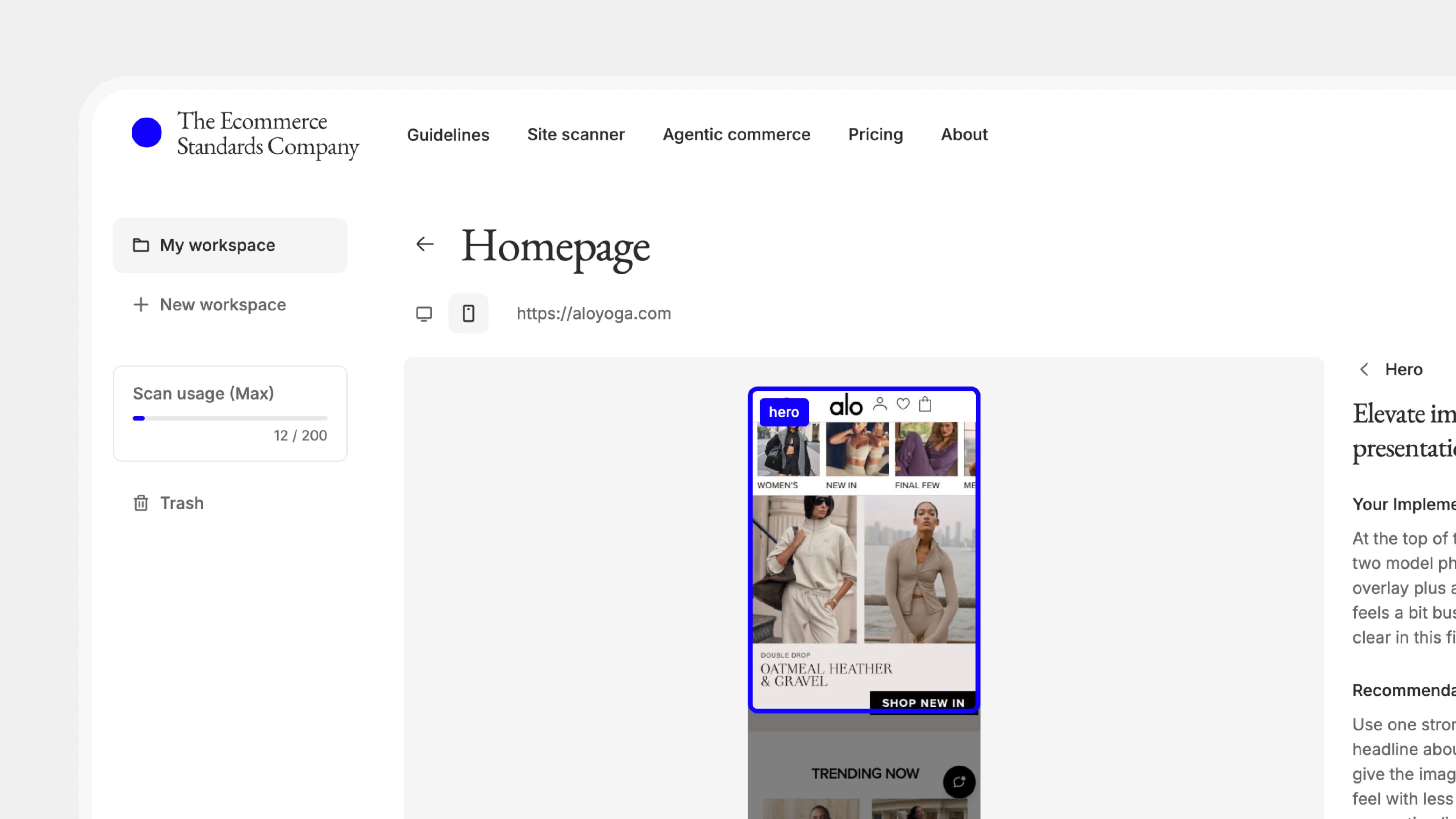
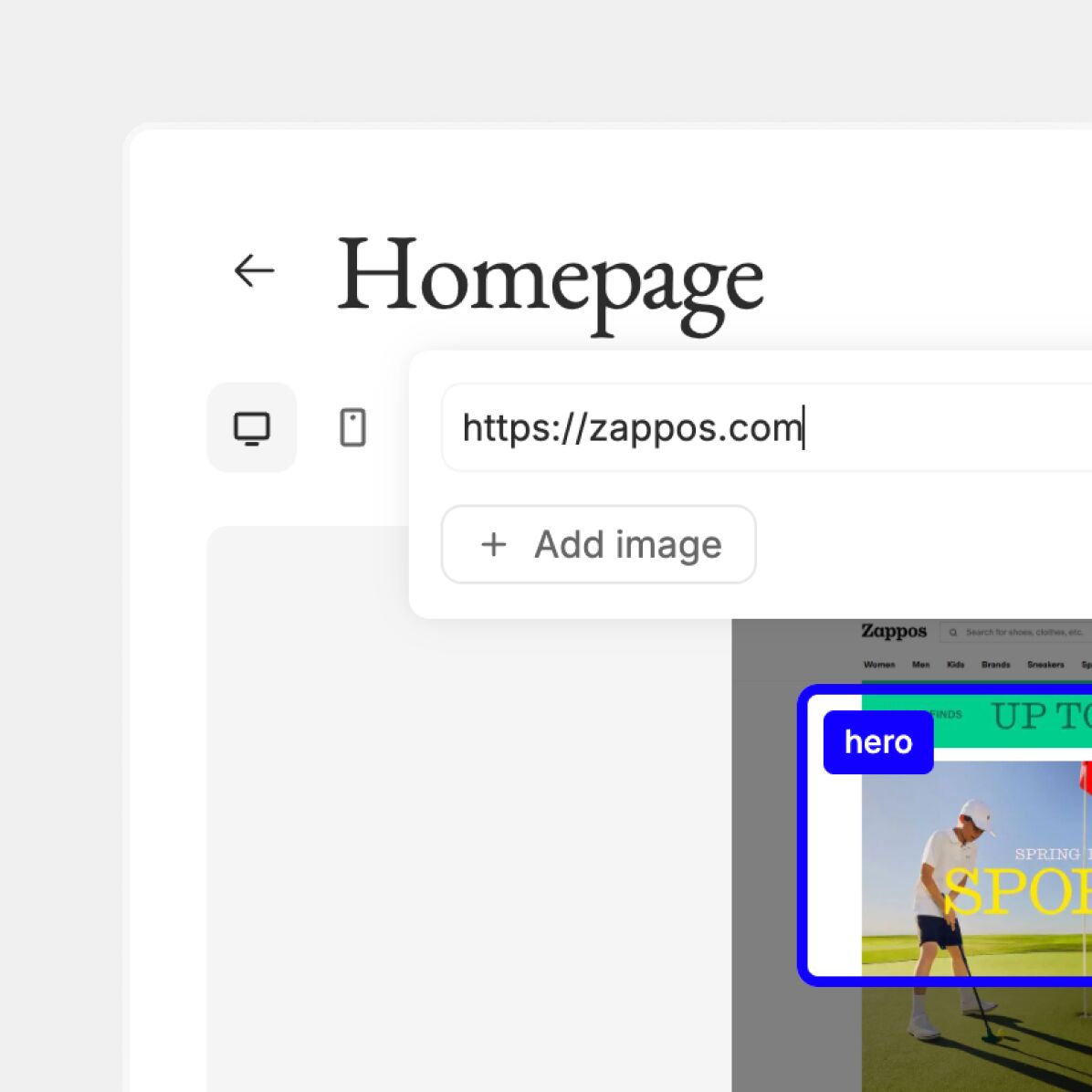
I designed the scanner around the customer journey rather than running a generic audit. Merchants see issues organized by stage, from home page to cart, so they can prioritize fixes based on where customers actually drop off.
Agentic readiness scores
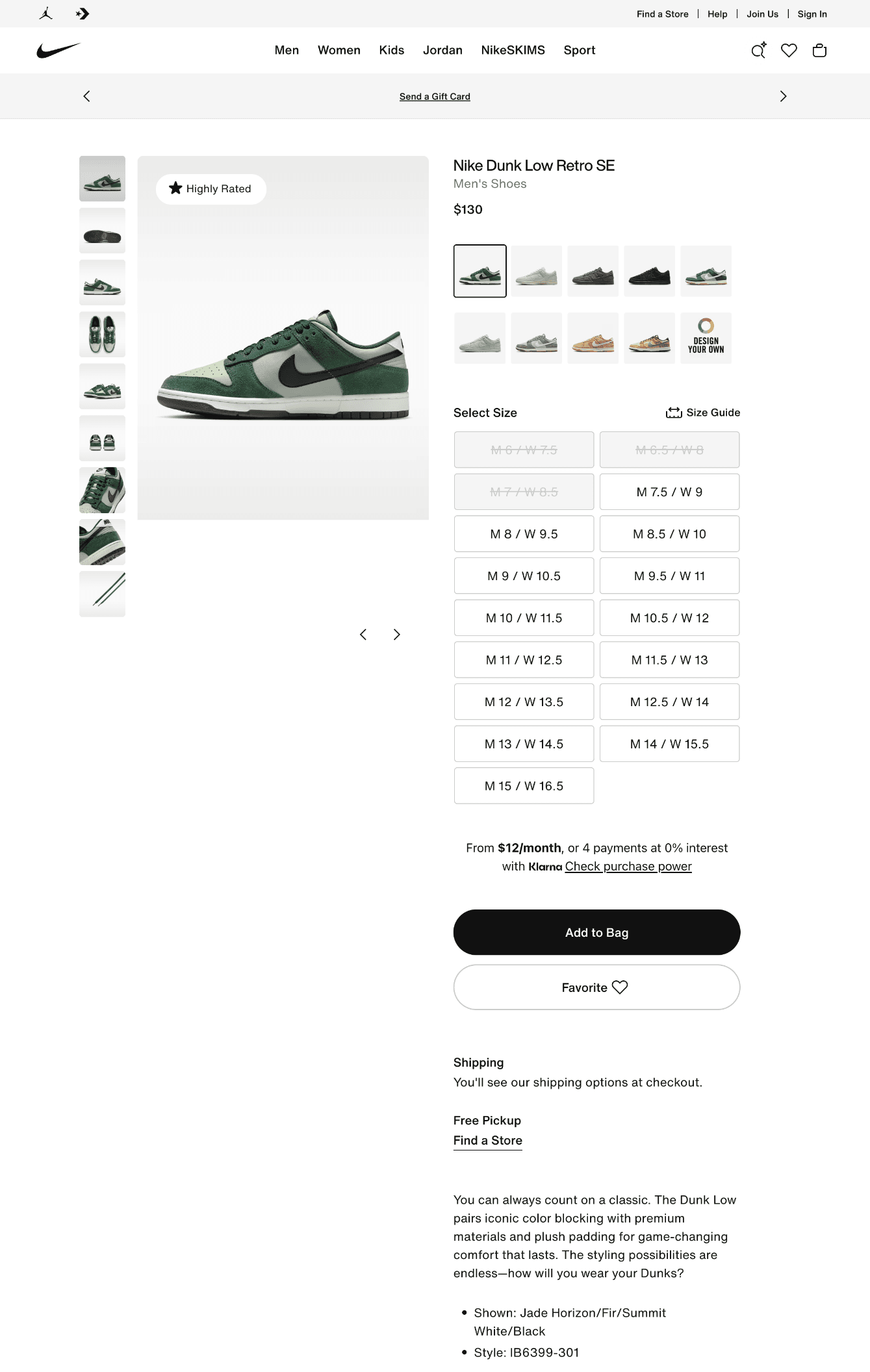
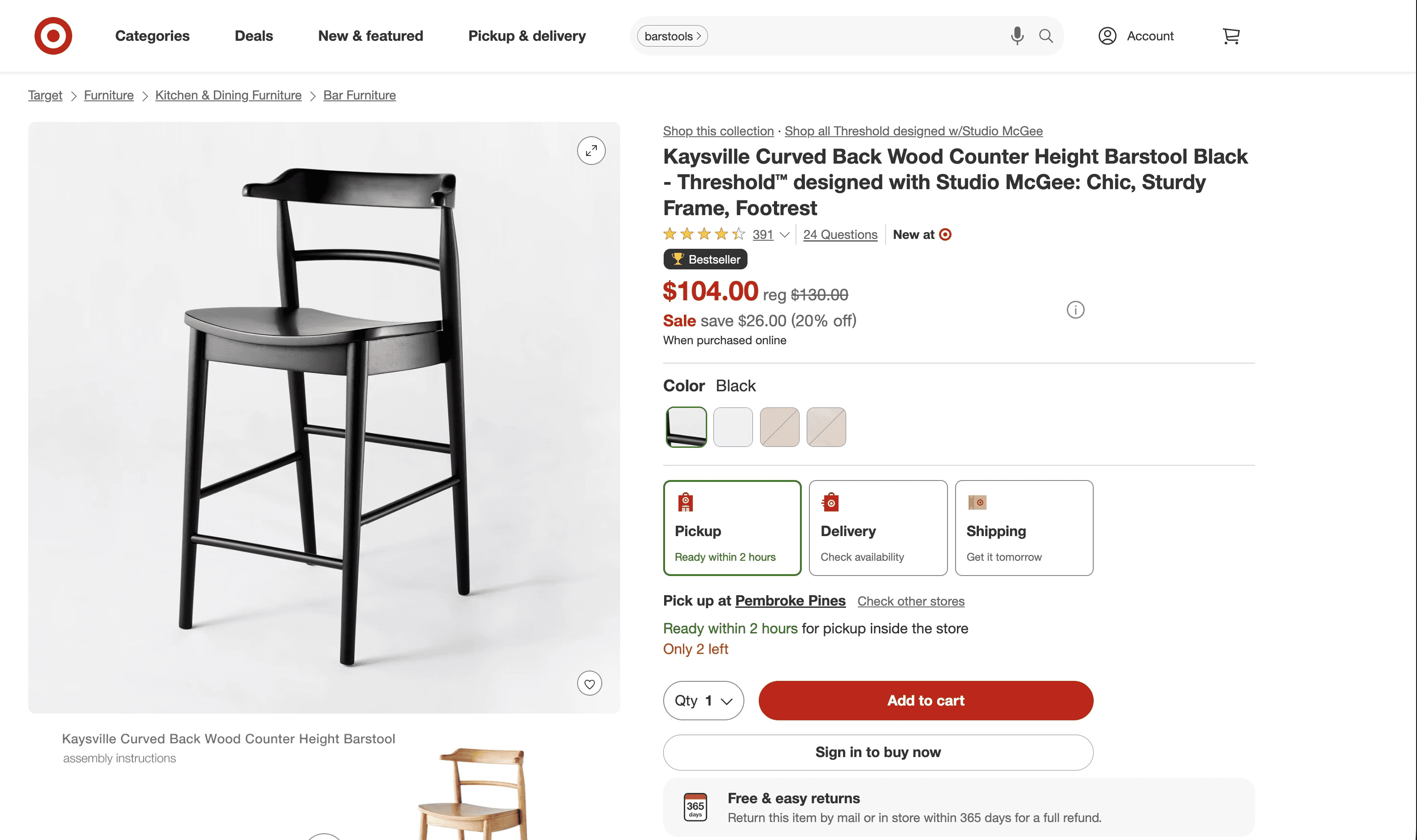
AI agents are already shopping on behalf of consumers, and most stores aren't built for that. The score evaluates how well a store's structured data supports agent discovery, comparison, and recommendations. I scoped it to structured data first because that's the layer agents depend on.
The Ecommerce Standards Company
json
{
"@context":"https://schema.org",
"@type":"Product",
"name": "Kaysville Curved Back Wood Counter Height Barstool Black - Threshold designed with Studio McGee",
"sku": "TGT-KAY-BLK-001",
"name": "Threshold designed with Studio McGee"
"@type":"Product",
"name": "Kaysville Curved Back Wood Counter Height Barstool Black - Threshold designed with Studio McGee",
"sku": "TGT-KAY-BLK-001",
"name": "Threshold designed with Studio McGee"
}
{
"description": "Chic, sturdy frame with footrest",
"image": "https://target.com/kaysville-barstool-black.jpg",
"category": "Furniture > Kitchen & Dining Furniture > Bar Furniture",
"offers": {
"image": "https://target.com/kaysville-barstool-black.jpg",
"category": "Furniture > Kitchen & Dining Furniture > Bar Furniture",
"offers": {
"@type": "Offer",
"price": 104.00,
"priceCurrency": "USD",
"price": 104.00,
"priceCurrency": "USD",
"priceValidUntil": "2026-02-28",
"image": "https://target.com/kaysville-barstool-black.jpg",
"availability": "https://schema.org/LimitedAvailability",
"itemCondition":"https://schema.org/NewCondition",
"image": "https://target.com/kaysville-barstool-black.jpg",
"availability": "https://schema.org/LimitedAvailability",
"itemCondition":"https://schema.org/NewCondition",
"seller": {
"@type": "Organization",
"name": "Target"
"name": "Target"
}

AI assistant (Stan)
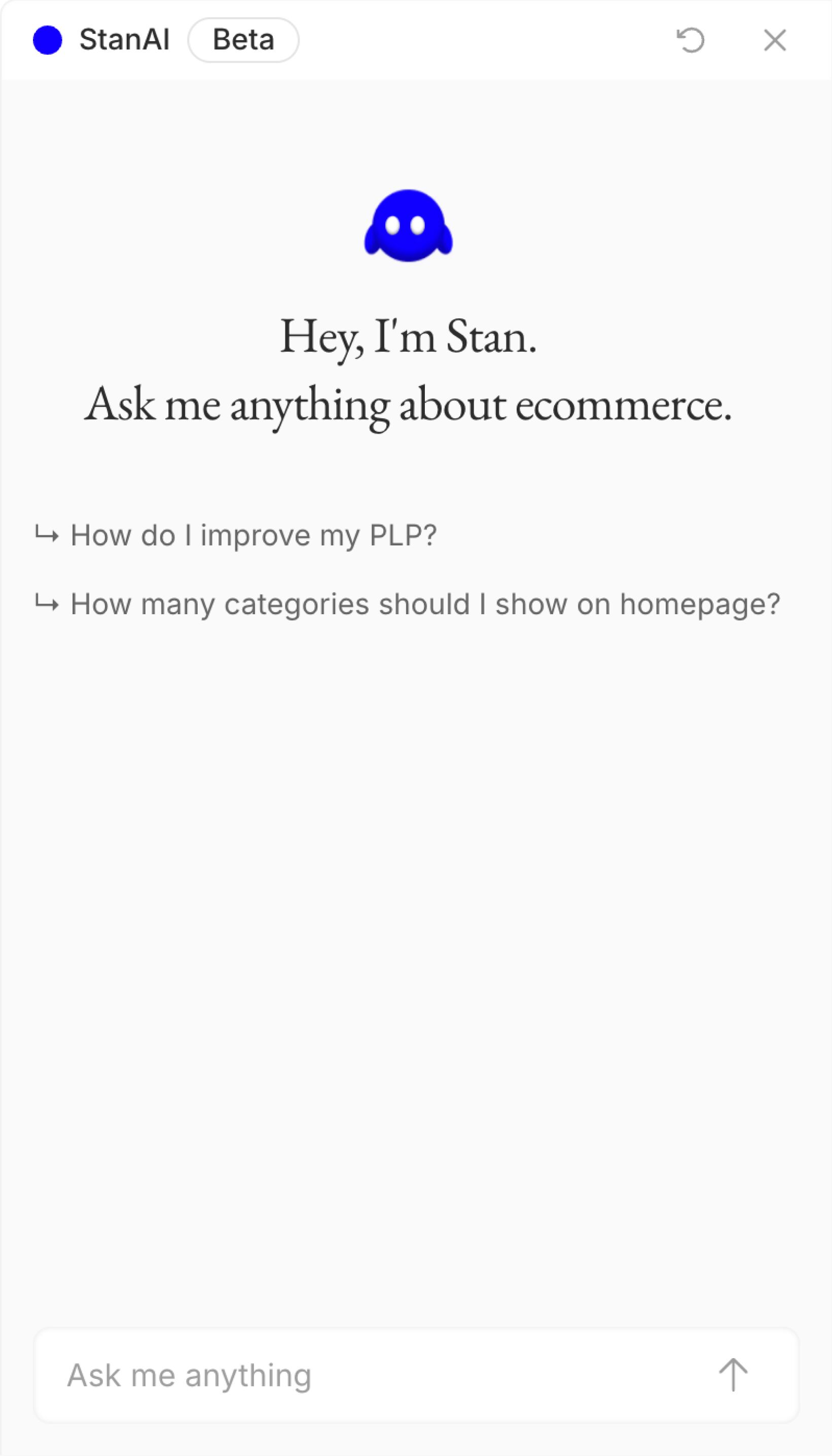
Merchants need answers in context, so I trained an AI assistant I named Stan on ecommerce research so merchants can get specific guidance on everything from checkout flows to product page layout without leaving the platform.
© 2026. Made by @jaimcarrasco